Transform Stationery with a Canva Template Name Label Sticker
Let’s be honest: standard stationery organization often feels like an afterthought. We grab a permanent marker, scribble a name on a notebook spine, and hope for the best. But for the creative professional, the dedicated student, or the meticulous planner, that approach misses a massive opportunity for branding and cohesion. This is where the Canva Template Name Label Sticker enters the conversation. It is not just a functional tool to identify your belongings; it is a design asset that bridges the gap between practical organization and high-end visual identity.
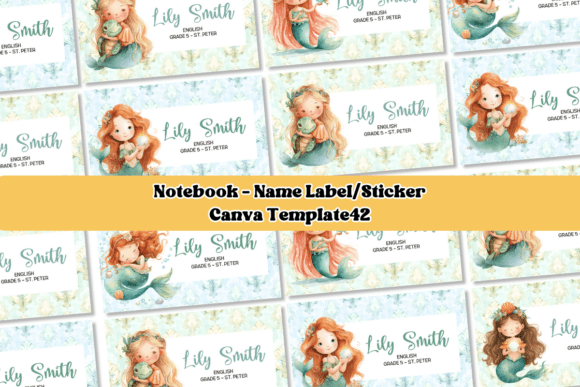
As a designer, I look at a label template differently than a casual user might. I see typography, whitespace, and hierarchy. The Canva Template Name Label Sticker offers a specific visual personality: it is clean, structured, yet inherently customizable. It typically utilizes modern typography—often a mix of sans serif fonts for clarity and script fonts for personality—to create a look that feels both professional and approachable. The visual characteristics usually revolve around balance. There is a designated focal point for the name, supported by secondary text for dates or subjects. This structure ensures that even if you are not a professional designer, the end result looks like it was crafted by one.
The Anatomy of a Professional Label
When we talk about the style of a Canva Template Name Label Sticker, we are discussing versatility. Unlike a rigid, pre-printed label from a store, these templates are dynamic. The "personality" of the design adapts to the user. For a corporate brand, the label can be stripped back to monochrome minimalism. For a teacher or a parent, it can embrace color and playful illustrations. The core appeal lies in this adaptability. You are buying a framework, not a restriction.
From a technical standpoint, these templates are a masterclass in font pairing. A common design pattern you will see is a bold, capitalized display font for the header (like "Notes" or "Portfolio") paired with a delicate, flowing handwritten font for the actual name. This creates a visual hierarchy that guides the eye immediately to the most important information. It elevates the object it adheres to. A simple cardboard notebook suddenly feels like a curated piece of brand identity when labeled with a high-quality design.
Strategic Applications: Beyond the Notebook
While the primary use case is obvious—labeling notebooks and books—the real value of the Canva Template Name Label Sticker extends much further into your professional ecosystem. In packaging design, these stickers are invaluable. Imagine you are a small business owner selling handmade candles or artisanal soaps. Instead of investing thousands in custom die-cut sticker printing for every variation, you can use these templates to create cohesive branding for your product lines. You can print them on high-quality matte or glossy sticker paper, giving your packaging a premium feel without the premium price tag.
Furthermore, consider the world of editorial design and publishing. If you are distributing media kits, press releases, or sample manuscripts, a personalized sticker on the envelope or the folder adds a tactile layer of professionalism. It signals to the recipient that you care about the details. For digital creators, the application shifts slightly. You can use the design as a digital overlay in social media graphics or as a favicon-style element in your website headers to maintain a consistent visual language across physical and digital touchpoints.
Designing for Readability and Hierarchy
One of the most critical aspects of using a Canva Template Name Label Sticker is understanding how it influences readability. A label has very limited real estate. If the typography is too ornate or the layout too cluttered, the message is lost. Good templates are designed with this constraint in mind. They utilize modern typography principles where legibility is paramount. The spacing (kerning and leading) is usually pre-adjusted to ensure that even smaller text remains crisp when printed.
When you customize these templates, you are playing with visual hierarchy. The design guides you to prioritize information. Usually, the name is the anchor. Secondary information, such as a class number, a date, or a department, is positioned to complement, not compete. This hierarchy is crucial for brand perception. A well-organized label suggests a well-organized mind or business. It builds trust with your audience, whether that audience is a client, a student, or a collaborator.
Practical Guide to Customization and Pairing
To get the most out of these templates, you need to approach the editing process with a strategy. Here is how to evaluate the fit and maximize the potential of your Canva Template Name Label Sticker:
- Evaluate the Font Style: Look at the existing typeface. Is it a serif font that conveys tradition and authority, or a sans serif font that feels modern and clean? Ensure the style of the template aligns with the "voice" of your project. A legal firm’s binders should not use a whimsical script font.
- Test Font Pairings: Don't be afraid to mix it up. If the template uses a heavy premium font for the title, try pairing it with a lighter weight for the details. Contrast is key in graphic design. If you swap the fonts, ensure they share a similar x-height or mood to maintain harmony.
- Color Theory: Use color to reinforce your brand identity. If your brand uses a specific shade of teal, input that hex code into Canva. However, remember that screen colors often look different than print colors. It is wise to test print a sheet before committing to a large batch.
- Commercial Considerations: If you are using these for your business, review the licensing. Most Canva templates allow for commercial use, meaning you can sell the printed copies of your designs (like stickers for planners) as long as you are not selling the digital template file itself.
Elevating the Mundane
The ultimate goal of using a Canva Template Name Label Sticker is to inject joy and order into the mundane. It is about taking a utilitarian object—a file folder, a storage box, a textbook—and turning it into a canvas for expression. For the entrepreneur, it is a cost-effective way to brand their workspace. For the educator, it is a way to create a welcoming classroom environment. For the creative, it is a small but significant way to honor their own work.
By leveraging design assets like these, you bypass the steep learning curve of software like Adobe Illustrator. You get the benefit of professional graphic design thinking—proper alignment, appropriate font choices, and balanced composition—wrapped in a user-friendly interface. So, the next time you reach for a marker to label your planner, consider the upgrade. A well-designed label doesn't just identify a notebook; it defines the person carrying it. It is a small detail, but in the world of design and branding, the details are everything.