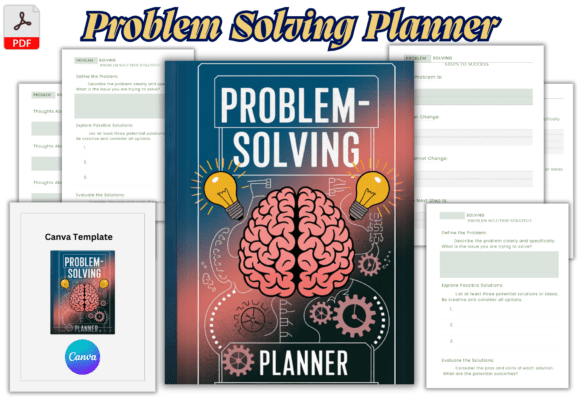
Brainstorm, Solve, and Track: Your Problem-Solving Planner
Every project, whether it’s a brand launch or a personal goal, hits a wall eventually. You stare at the brief, the blank page, or the complex challenge, and the path forward isn't clear. This is where a structured approach to thinking becomes your most valuable design asset. The 🧠 Problem-Solving Planner is more than just a notebook; it's an 82-page guided workbook designed to be the backbone of your creative and strategic process. It’s built for the entrepreneur, the designer, the marketer, and the creator who needs to move from confusion to clarity.
A Framework for Your Creative Chaos
Think of this planner not as a static PDF, but as a systematic template for critical thinking. Its visual personality is clean, structured, and intentionally minimalist. The design prioritizes function over flourish, creating a calm, focused space where your ideas can take shape without visual noise. This isn't about pretty fonts or decorative borders; it's about providing a reliable typeface and layout that supports deep work. The overall appeal is professional and practical, making it suitable for both personal brainstorming sessions and client-facing workshops.
The planner’s strength lies in its step-by-step worksheets. It guides you through a logical sequence: identify the core problem, break it down into manageable components, brainstorm creative solutions without judgment, and then evaluate those solutions with structured templates. For a graphic designer facing a client revision, this process is invaluable. Instead of reacting emotionally, you can use the planner to deconstruct the feedback, analyze the root cause, and generate multiple revision strategies. The critical thinking prompts act as a gentle nudge, pushing you to consider angles you might otherwise overlook, enhancing your decision-making skills systematically.
Integrating the Planner into Your Workflow
Where does a tool like the 🧠 Problem-Solving Planner fit into a creative professional's life? The answer is almost everywhere. It’s a versatile piece of your design assets toolkit.
- For Brand Strategists & Entrepreneurs: Use it during the discovery phase of a new brand identity project. The worksheets can help articulate a client's mission, values, and challenges, forming the foundation for a powerful logo design and visual strategy. It’s perfect for mapping out product launches or solving operational bottlenecks.
- For Marketers & Content Creators: Planning a complex campaign? The planner helps you break down audience targeting, messaging pillars, and channel strategy. When writer's block hits for a blog post or social media graphics series, the brainstorming templates can unlock new content angles.
- For Designers & Publishers: In editorial design or packaging design, complex projects with many moving parts can feel overwhelming. This workbook provides a space to untangle project requirements, prioritize tasks, and track progress, ensuring nothing falls through the cracks. It’s a practical tool for maintaining consistency and professionalism in your process.
The included editable Canva template is a significant bonus, especially for those who value customization. You can adapt the layout, fonts, and colors to match your personal brand or your studio's aesthetic. This flexibility allows you to rebrand it for use in workshops, client onboarding kits, or even as a commercial product in your own digital shop, provided you adhere to the licensing terms. It transforms from a personal tool into a potential revenue stream.
Making the Tool Work for You
Simply downloading the 🧠 Problem-Solving Planner won’t solve your problems. The value is unlocked through consistent use. Here’s how to integrate it effectively:
- Start with One Problem: Don’t try to overhaul your entire business at once. Pick one specific, nagging challenge—like "How can I improve my client onboarding process?"—and dedicate a section of the planner to it. The focused, 8.5 x 11 in format is designed for this kind of deep dive.
- Embrace the "No Bleed" Design: The no bleed layout is intentional. It gives your thoughts and sketches a defined boundary, which can actually enhance focus. Print it out, use it digitally in a note-taking app, or work directly in the Canva file. The format is built for flexibility across digital and print projects.
- Pair It with Your Existing Tools: This planner isn’t meant to replace your project management software or design suite. Instead, use it as the preliminary thinking layer. The solutions and action plans you develop here can then be migrated into Asana, Trello, or your design brief, creating a seamless flow from ideation to execution.
The true power of this guided workbook is its ability to cultivate a growth mindset. By regularly engaging with its prompts, you train yourself to see challenges not as roadblocks, but as puzzles to be solved. This shift in perspective is fundamental for long-term success in any creative or business endeavor. It’s a practical investment in your own critical thinking infrastructure, a quiet companion that helps you navigate complexity with clarity and confidence. Stop wrestling with ambiguity; give your problem-solving process the structure it deserves.