Summer Number Bond: Make Math Engaging This Season
When you think of summer, you might picture sunshine, beach days, and relaxed schedules. For educators and parents, it can also mean finding ways to keep young minds sharp without the pressure of the school year. This is where a thoughtfully designed resource like Summer Number Bond templates comes in. It’s not just another worksheet packet; it’s a bridge between structured learning and seasonal fun, designed to help children grasp fundamental math concepts through visual, hands-on practice.
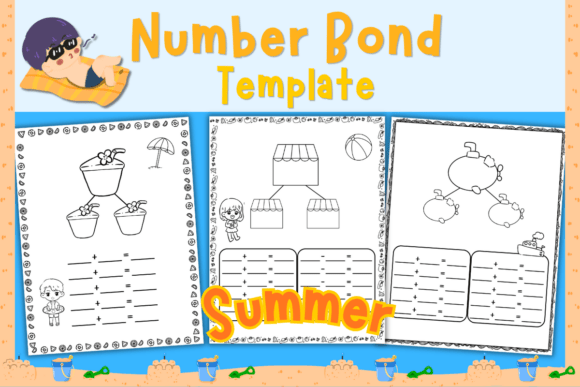
At its core, a number bond is a simple diagram that illustrates the relationship between a whole number and the parts that combine to make it. The Summer Number Bond templates take this foundational concept and wrap it in the cheerful, relatable imagery of summer. Think of pages adorned with simple icons like sunglasses, seashells, or suns, creating a visual context that feels fresh and timely. This approach does more than just look nice—it taps into a child’s immediate world, making abstract math feel concrete and accessible.
Understanding the Visual and Practical Appeal
The true strength of this resource lies in its balanced design. It avoids visual clutter, which is crucial for young learners who can easily become distracted. The layout is clean, with ample white space, ensuring that the focus remains squarely on the number bond diagrams themselves. The summer-themed graphics are used as subtle accents, not overwhelming decorations. This thoughtful balance demonstrates a key principle in educational design: engagement should support, not supersede, the learning objective.
From a practical standpoint, the 48-page PDF is built for real classroom or home use. The letter-size (8.5 x 11 inches) format means it’s ready to print without hassle. For a teacher, this is a significant time-saver. Instead of creating materials from scratch, you have a comprehensive, thematic packet ready for math centers, morning work, or summer tutoring sessions. For a homeschooling parent, it provides a structured yet playful way to reinforce addition and subtraction facts during the break, preventing the common "summer slide" in skills.
Where This Resource Truly Shines: Real-World Applications
Consider a first-grade teacher planning a "Beach Week" math unit. The Summer Number Bond templates can be seamlessly integrated into daily rotations. One station might use the templates for independent practice, while another uses them for a collaborative game where students build bonds together. The consistent summer theme across the packet helps create an immersive, cohesive learning environment for the week.
For a tutor or interventionist, the variety within the 48 pages is a major asset. You can easily differentiate instruction. A student just beginning to understand part-part-whole relationships might start with bonds involving numbers up to 10, using the visual cues from the summer icons to count. A more advanced student can tackle larger numbers or use the blank templates to create their own problems, fostering deeper number sense. The resource grows with the learner.
Design Principles That Support Learning
Looking at this through a designer's lens, the template packet adheres to solid visual hierarchy. The most important element—the numbers and the bond circles—is given prominence through size and placement. The decorative elements are secondary. This clarity is essential for early readers and math learners. It teaches them, subconsciously, how to scan a page for key information—a skill that translates far beyond mathematics into all areas of literacy and information processing.
The choice of a clean, likely sans-serif style for the numbers enhances readability, especially for children who are still developing their visual discrimination skills. Simplicity in typography for educational materials is not a limitation but a deliberate, effective choice. It ensures that the cognitive load is on understanding the math, not deciphering fancy letterforms.
Maximizing the Resource: Practical Tips
To get the most out of the Summer Number Bond templates, think beyond simple fill-in-the-blank exercises. Here are a few strategies:
- Interactive Notebooks: Print the pages at a reduced scale (e.g., 75%) and have students glue them into composition books. They can then write reflections, draw their own representations, or solve related word problems on the facing page.
- Dry-Erase Sleeves: Place a few key templates in plastic sleeves. Students can use dry-erase markers to fill them in repeatedly, making the resource reusable for practice or assessment.
- Storytelling with Math: Encourage children to create a story problem that matches a number bond. For example, "There were 8 goldfish crackers. My brother ate 3. How many are left?" This connects the abstract diagram to a narrative, deepening comprehension.
- Partner Check: Have one student solve a bond, then explain their thinking to a partner. The partner’s job is to check the work and explain it back. This verbal processing solidifies understanding.
When evaluating if this is the right fit for your needs, consider your primary goal. Is it for consistent, independent practice? The volume of this packet supports that. Is it for a specific, short-term thematic unit? Its cohesive design makes it ideal. Always preview a few pages to ensure the layout and level of challenge align with your students' current abilities. The beauty of a PDF is that you can print only the pages you need for a particular lesson or student.
Ultimately, the Summer Number Bond templates exemplify how effective educational resources blend clear design with pedagogical understanding. They provide a scaffold—a visual and conceptual support system—that helps children build confidence in their mathematical reasoning. By presenting this foundational skill in a context that feels celebratory and seasonal, the resource does something powerful: it makes the hard work of learning feel a little more like play. And in the summer, that’s a welcome combination.